Category: History

  • Visiting the National Museum of the United States Army

    Visiting the National Museum of the United States Army

    Last April, on my first day after finishing up my old role in the U.S., I finally made the trip to the National Museum of the United States Army in Fort Belvoir, Virginia. It had been on my list ever since it opened during the pandemic, and I’d been meaning to visit, especially since my old 3D printing and wargaming friend Bruce volunteers there. Unfortunately, Bruce wasn’t working that day, but the museum more than made up for it with some of the best military museum displays I’ve ever seen.

    An Impressive and Immersive Experience

    From the moment I walked in, it was clear that a lot of money and care had gone into this museum. Everything was professionally designed and presented, with a modern layout, excellent lighting, and well-thought-out exhibit flow. The museum’s commitment to constant updates and new exhibitions was also apparent—this is a place that continues to evolve, not just a static collection of artifacts.

    Incredible Displays and Armored Fighting Vehicles

    One of the biggest highlights was the stunning displays of armored fighting vehicles (AFVs). Having built and painted a fair few tanks in various scales over the years, seeing them in real life was a revelation.

    • M4 Sherman – This was a standout moment for me. I’ve assembled and painted plenty of Shermans in 15mm and 28mm, but seeing one up close made me realize just how massive they are in person. The models I’ve worked on never quite captured that scale in my mind.
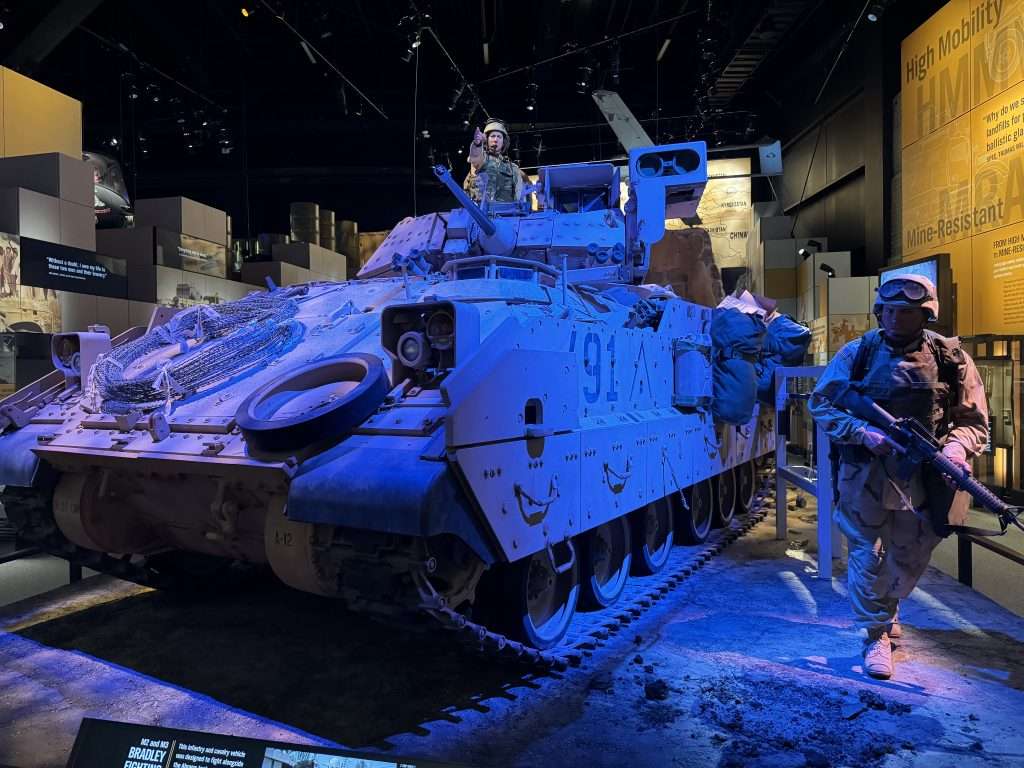
    • Bradley Fighting Vehicle – An imposing presence that reminds you just how much modern warfare has evolved.
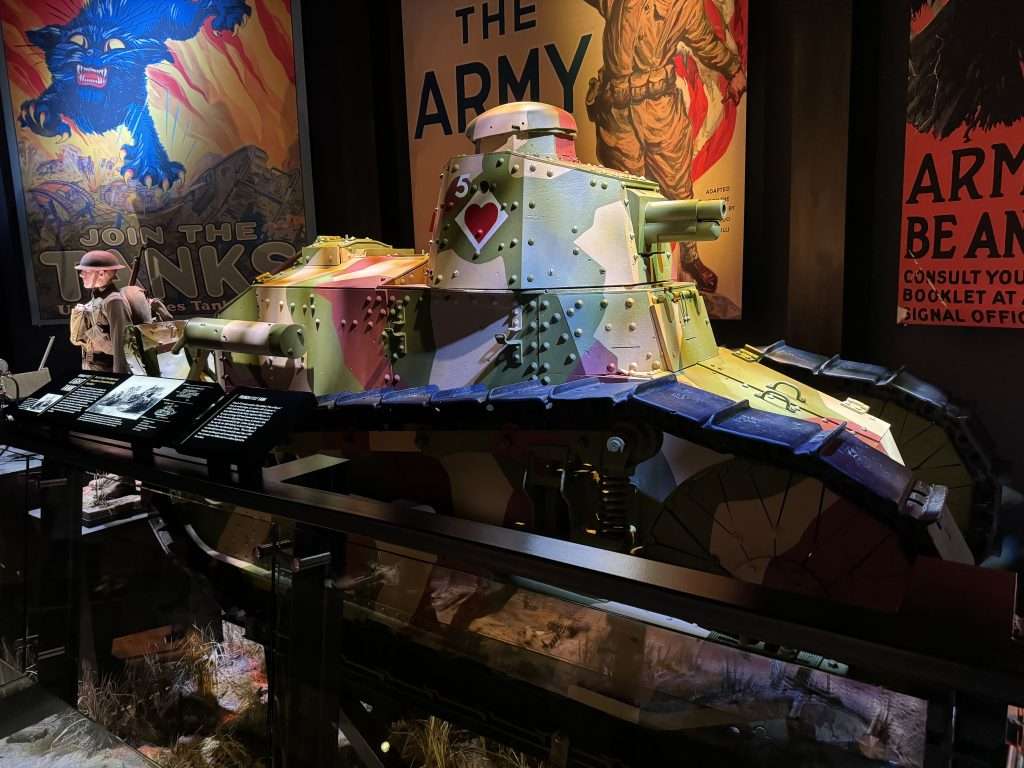
    • French FT-17 Light Tank – Seeing this iconic World War I tank up close was fantastic. It’s one of the earliest examples of modern tank design, and you can immediately see the lineage that later tanks would follow.
    • WWII Jeep with HMG Aimed at Aircraft – A beautifully arranged display showing a machine-gunner in action, highlighting how adaptable these vehicles were in combat.
    • Troops Boarding a Landing Craft – One of the most immersive and cinematic dioramas in the museum. The way the scene is set up makes you feel like you’re right there on D-Day, stepping onto a Higgins boat, ready to storm the beaches.

    Some of the Best Displays I’ve Seen in a Military Museum

    I’ve been to plenty of military museums around the world, but this one ranks among the best. The mix of large-scale dioramas, historical artifacts, personal accounts, and interactive elements makes it both engaging and educational. The exhibits are designed to tell a story, not just showcase objects, and that really sets it apart from many other military museums.

    One thing I particularly appreciated was how they balanced historical accuracy with accessibility. Whether you’re a serious military historian, a wargamer, or just someone casually interested in military history, there’s something here for you.

    A Must-Visit for Military Enthusiasts and Wargamers

    While I didn’t get to meet up with Bruce this time, just knowing he was part of the museum’s team made the visit even more special. I walked away inspired and with plenty of ideas for future wargaming projects, especially after seeing the detailed battlefield maps, vehicle displays, and soldier accounts.

    If you’re ever in the D.C. area, I can’t recommend the National Museum of the United States Army enough. Whether you’re into military history, wargaming, or just want to see some of the most well-presented exhibits in any museum, it’s absolutely worth the trip.

    Check out their website here: https://www.thenmusa.org.

  • Visiting the National Army Museum in Kensington: A Wargamer’s Perspective

    Visiting the National Army Museum in Kensington: A Wargamer’s Perspective

    On a recent trip to London, I decided to visit the National Army Museum in Kensington for the first time. I’d already been to the Imperial War Museum (IWM) three times, but I wanted to branch out and see what the Army Museum had to offer. With a free morning, I started my day at the IWM, taking in its fantastic displays before heading across town in the afternoon, just before meeting a friend for dinner.

    Getting There: Kensington Isn’t Built for Public Transport

    I took the Tube, but getting to the National Army Museum was more of a hassle than expected. It really feels like Kensington is a rich person’s area—the kind of place that’s designed to NOT be easily accessible by public transport, almost as if it’s meant to keep the “common folk” out. The museum is tucked away near the Royal Hospital Chelsea, and I had to check my phone a few times to make sure I was heading in the right direction. If you’re planning a visit, expect to walk a bit and maybe factor in some extra time to find it.

    The Museum Experience: Interesting, But Small

    The museum offers a solid collection of exhibits covering British military history, from the English Civil War to modern conflicts. The galleries are well laid out, and there’s a good mix of artifacts, multimedia displays, and interactive sections.

    A few highlights:

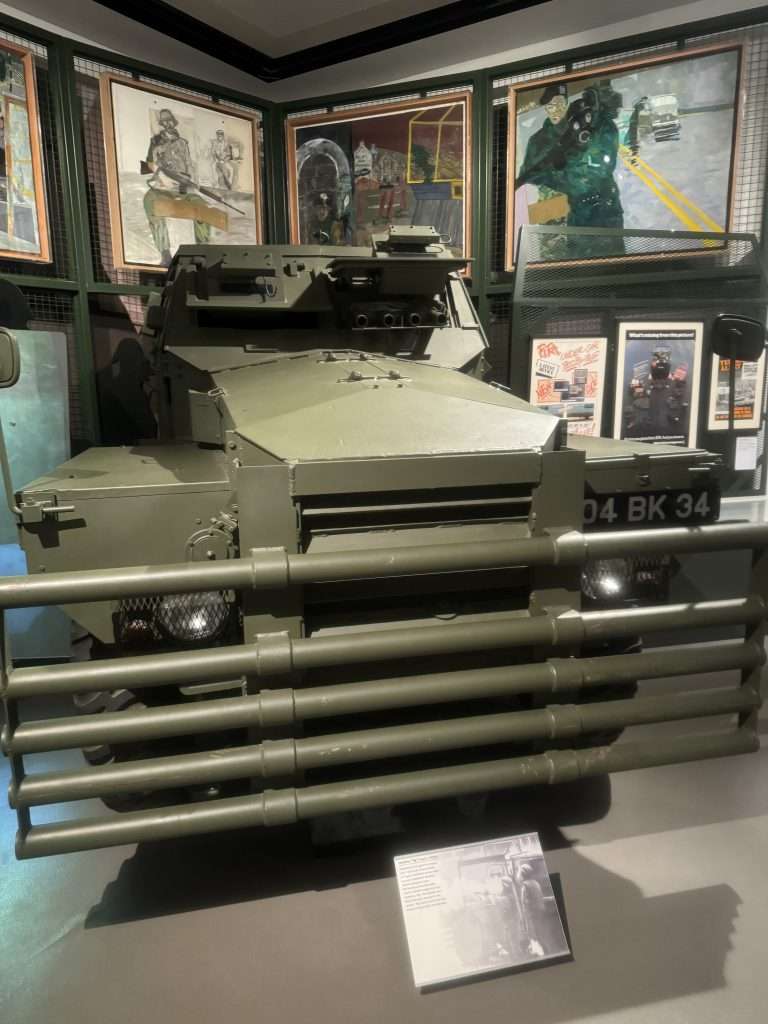
    • Armored Vehicles – It was great to see a few AFVs (armored fighting vehicles) on display, including a Humber Pig (used during The Troubles in Northern Ireland), a Daimler Dingo scout car, and a Bren Gun Carrier. While they don’t have the massive tank collection of Bovington or even the centerpiece vehicles like the IWM, these were still interesting to check out.
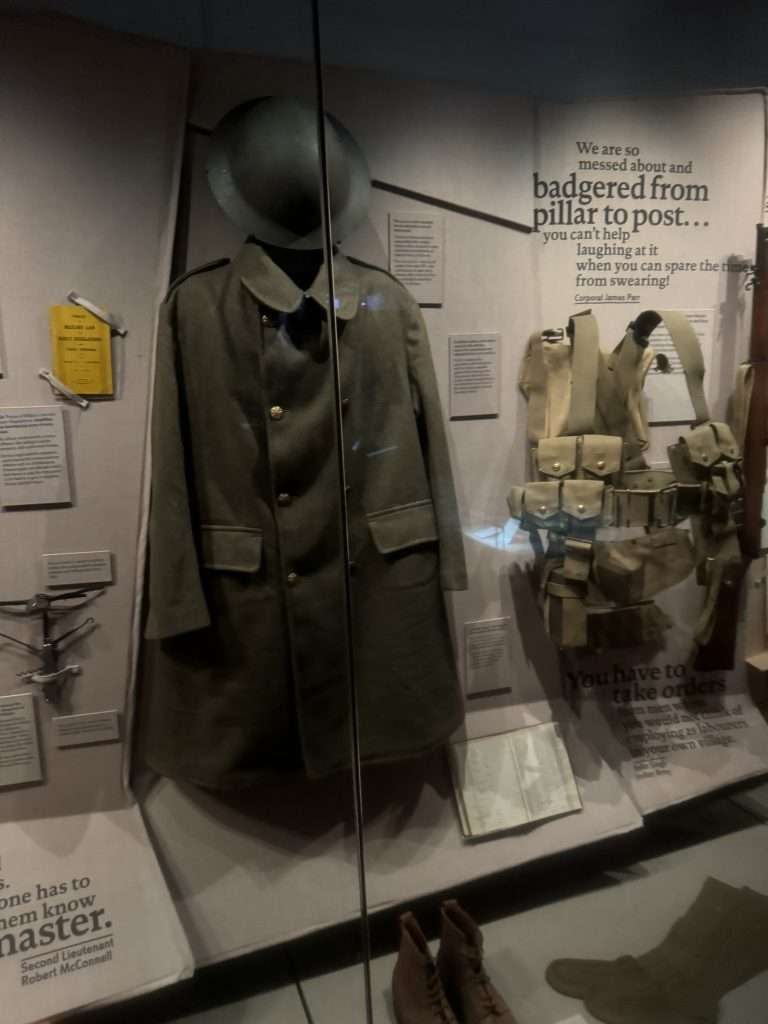
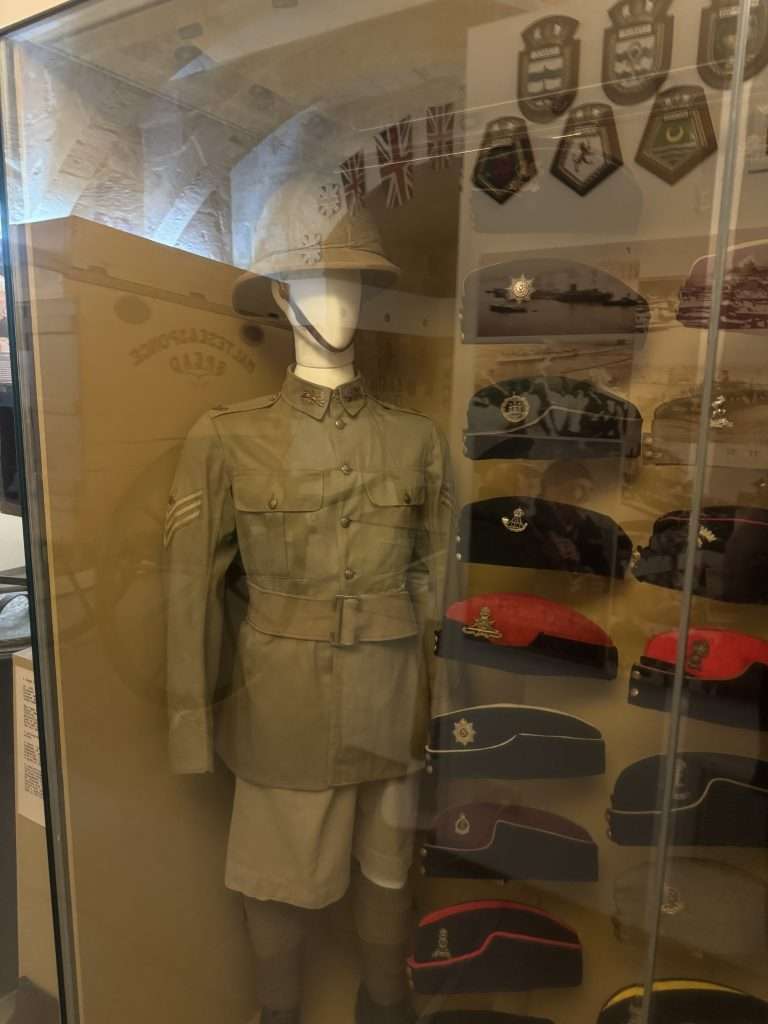
    • Lots of Uniforms – The museum has a huge selection of military uniforms, spanning from early British Army history right up to modern-day kit. If you’re into the evolution of military dress and gear, there’s a lot to take in.
    • Up to Date on Current Conflicts – Unlike some military museums that focus purely on history, this one does acknowledge modern threats and conflicts, including Russia. Given how fast things are evolving in global security, it was good to see the museum staying relevant to today’s world.

    That said, the IWM is simply on another level. The National Army Museum just felt a lot smaller in comparison. It has some interesting pieces, but it doesn’t match the scale, depth, or immersive storytelling of the IWM’s exhibits. If you’re only in London for a short time and debating between the two, I’d recommend prioritizing the IWM unless you have a very specific interest in British Army history.

    I’ll admit, though, that I was kind of rushed during my visit. A friend had recently passed away, and I was killing time until I was going to connect with a mutual friend to remember him afterwards. So, I may not have been in the right headspace to fully appreciate everything the museum had to offer.

    That being said, as I start to get more into Napoleonic and English Civil War wargaming, I could see myself making a return visit with fresh eyes. Those sections had some great historical context that might be even more interesting with a deeper understanding of the period’s military tactics and forces.

    One highlight was seeing a tank in British Army of the Rhine (BOAR) camouflage outside—a cool touch and a nice way to set the tone before heading in.

    Food & Gift Shop: Functional, But Forgettable

    After wandering the museum, I grabbed a bite to eat at the café and went for the spicy chicken burger. It was fine—nothing amazing—but it did the job. If you’re just looking for a quick meal, it’s convenient but not particularly memorable. There are far better food options nearby if you have time to explore.

    The gift shop was also underwhelming. I was hoping to find some unique books, models, or wargaming-relevant items, but the selection felt pretty generic—mostly tourist souvenirs and books you could find elsewhere. It’s nothing like the IWM’s shop, which usually has a solid selection of military history books and interesting memorabilia.

    Final Thoughts

    If you’re a wargamer or history buff, the National Army Museum is worth a visit, but only if you’ve already seen the Imperial War Museum and are looking for something new. While it has some interesting exhibits, the IWM simply offers more in terms of impact, atmosphere, and collection size.

    That said, with my growing interest in Napoleonic and English Civil War wargaming, I can see myself making a return visit to take a deeper dive into those periods. It’s a museum that might get better with repeat visits—especially if you come in with a specific focus in mind. Just be prepared for a bit of a walk to find it!

  • A Wargamer’s Pilgrimage: Visiting the Imperial War Museum London

    A Wargamer’s Pilgrimage: Visiting the Imperial War Museum London

    During my trip to the Other Partizan 2024 wargaming convention in Newark, I took the opportunity to visit one of the world’s most renowned military museums—the Imperial War Museum (IWM) in London. As a wargamer with a deep interest in historical conflicts, it felt like a pilgrimage of sorts. The IWM isn’t just a museum; it’s an immersive exploration of warfare and its impact on society, a place where history, strategy, and personal stories collide.

    A Grand Entrance

    Stepping through the gates of the Imperial War Museum London, you’re immediately greeted by two enormous 15-inch naval guns, originally from HMS Ramillies and HMS Resolution. These imposing behemoths, once mounted on British battleships, set the tone for what’s inside—an overwhelming display of military power and human resilience.

    The museum is housed in the former Bethlem Royal Hospital, and the grand neoclassical façade hides an interior packed with artifacts from conflicts spanning the early 20th century to the present day.

    The Heart of the Museum: The Atrium

    The central atrium is where the museum truly makes an impression. As soon as I walked in, my eyes were drawn upward to a Supermarine Spitfire suspended from the ceiling, an aircraft that needs no introduction to wargamers and history buffs alike. Just below it, a Harrier Jump Jet and a German V-2 rocket provided an impressive display of 20th-century technological advancements in warfare.

    But for me, the standout was the British Mark V tank, one of the iconic behemoths of World War I, standing proudly as a testament to the first major use of armored warfare. Seeing this up close, with its riveted steel plates and lumbering frame, brought a new appreciation for the models we paint and push across the tabletop.

    The First World War Galleries

    As someone interested in Blood & Valor, I was particularly drawn to the First World War galleries. This section is brilliantly curated, offering a mix of personal artifacts, uniforms, dioramas, and immersive multimedia experiences.

    One of the highlights was the trench recreation, which gives visitors a chillingly realistic sense of what life was like on the Western Front. Walking through the dimly lit passage, surrounded by sandbags, barbed wire, and eerie sound effects, I couldn’t help but think of my own attempts to recreate similar battlefields in miniature. The displays of Lee-Enfield rifles, Webley revolvers, and German Mauser rifles were particularly interesting from a wargaming perspective, offering ideas for equipping squads in Blood & Valor scenarios.

    World War II and Beyond

    The Second World War galleries feature everything from Montgomery’s beret to a chilling collection of Nazi propaganda, a stark reminder of the ideological battles that defined the era.

    One of the standout exhibits was the Enigma machine, which always fascinates me—not just for its impact on the war but also for its place in wargaming. Seeing the real machine in person, alongside an explanation of the codebreaking efforts at Bletchley Park, made me reflect on the mechanics of secrecy, intelligence, and deception in games like Bolt Action and Chain of Command.

    The post-1945 exhibits, covering the Cold War, Falklands, Iraq, and Afghanistan, provided a more contemporary perspective on warfare. The section on the Vietnam War, while relatively small, was of particular interest given my ongoing efforts to build a 28mm Vietnam collection for future wargaming.

    Adding Some History to the Games Room

    Before leaving, I couldn’t resist visiting the museum’s gift shop, which turned out to be a treasure trove of inspiration. Among the many books and artifacts, I picked up a bunch of World War II propaganda prints to decorate our games room back home. From classic British “Keep Calm and Carry On” posters to American recruitment artwork and stark Soviet imagery, these pieces will not only add some character to the space but also serve as a constant source of wargaming inspiration.

    A Wargamer’s Takeaway

    What struck me most about the Imperial War Museum was the balance between grand military artifacts and deeply personal stories. The museum doesn’t just celebrate military might—it forces visitors to confront the realities of war, from its strategic implications to its human cost.

    For a wargamer, visiting the IWM is an invaluable experience. Seeing real-world tanks, aircraft, and weapons up close adds a level of authenticity and appreciation that no amount of rulebook research or model-building can replicate. The museum also offers plenty of inspiration for scenario design, historical campaign ideas, and even terrain-building.

    Final Thoughts

    If you’re ever in London, whether as a tourist or as part of a Partizan or Salute trip, a visit to the Imperial War Museum London is well worth the time. It’s an essential stop for anyone passionate about military history, wargaming, or simply understanding the deeper narratives behind the battles we so often re-fight in miniature.

    With my head full of ideas for future games, my phone packed with reference photos, and a roll of newly acquired wartime propaganda art under my arm, I left the museum energized for more historical wargaming. Now, back to painting my Blood & Valor force and finishing up my 28mm Vietnam jungle terrain…

  • Under Attack: Reliving the Illustrious Blitz in Senglea

    Under Attack: Reliving the Illustrious Blitz in Senglea

    On January 18, 2025—just after the anniversary of the Illustrious Blitz—Sarah and I participated in Heritage Malta’s guided tour, Under Attack: Reliving the Illustrious Blitz, an immersive experience in Senglea that brought to life one of the most devastating air raids of World War II. As members of both Heritage Malta and Wirt Artna, we are committed to exploring Malta’s rich military history, especially in light of our research into Operation Hercules and the planned Axis invasion of the island. This tour provided yet another fascinating glimpse into Malta’s resilience during the war.

    The Illustrious Blitz

    The tour centered around the events of January 16, 1941, when the aircraft carrier HMS Illustrious—crippled by Axis bombers—sought shelter in the Grand Harbour. The Luftwaffe and Regia Aeronautica, determined to finish the job, unleashed a relentless bombardment. Senglea, its bastions, and nearby areas bore the brunt of this attack, leading to widespread destruction.

    Our guide, an expert in Malta’s wartime history, led us through key locations in Senglea, pointing out scars from the bombing that still remain. The tour blended historical accounts, survivor testimonies, and archival photos, painting a vivid picture of the chaos and courage that defined the Illustrious Blitz. It was particularly striking to hear how civilians endured the constant attacks—many sheltering in hastily dug tunnels or makeshift bomb shelters while the island’s anti-aircraft defenses struggled to fend off wave after wave of enemy aircraft.

    Pizza at Il-Pirata Before More History

    After the tour, we stopped for lunch at Il-Pirata, one of our favorite spots to eat when in the area. This family-run pizzeria in Birgu serves up some of the best pizza on the island, with a great mix of local and Italian influences. Sitting outside, enjoying a classic Maltese Ftira-style pizza, and looking out over the historic surroundings made for a perfect break before we continued our deep dive into wartime Malta.

    The Malta at War Museum in Birgu

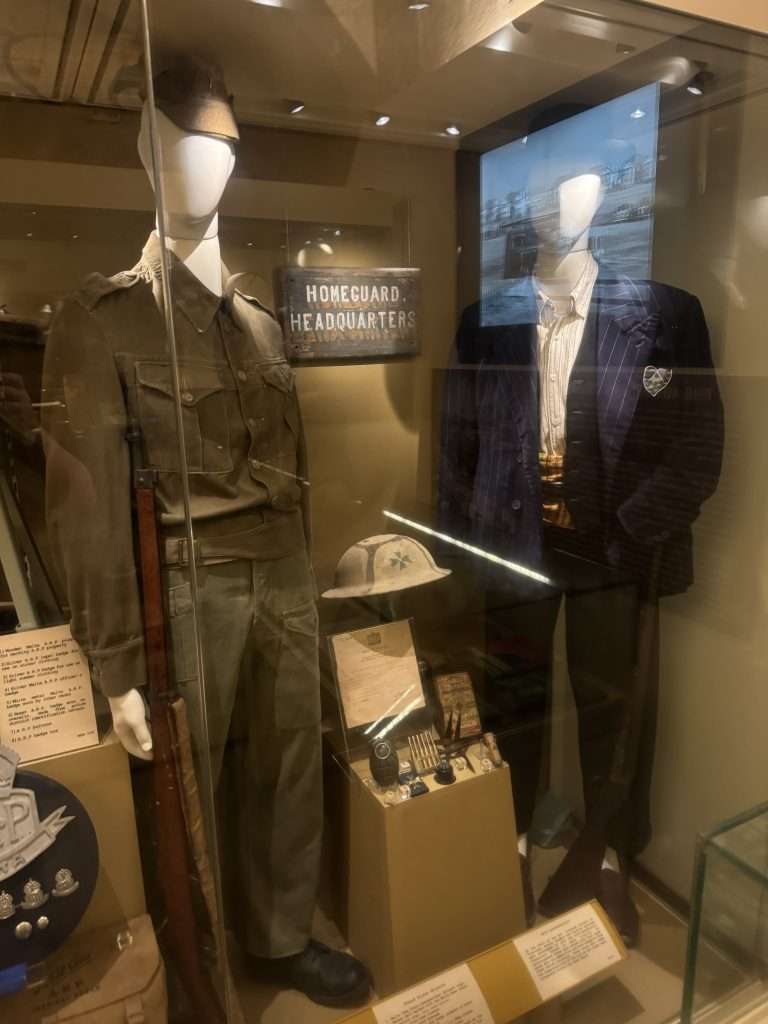
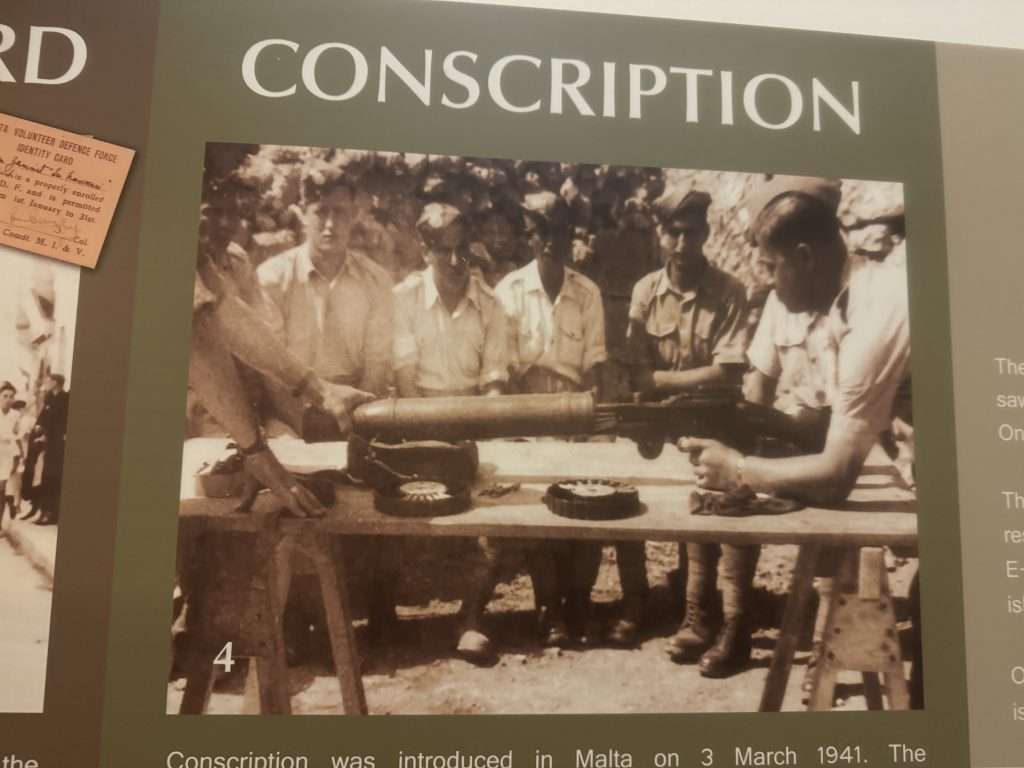
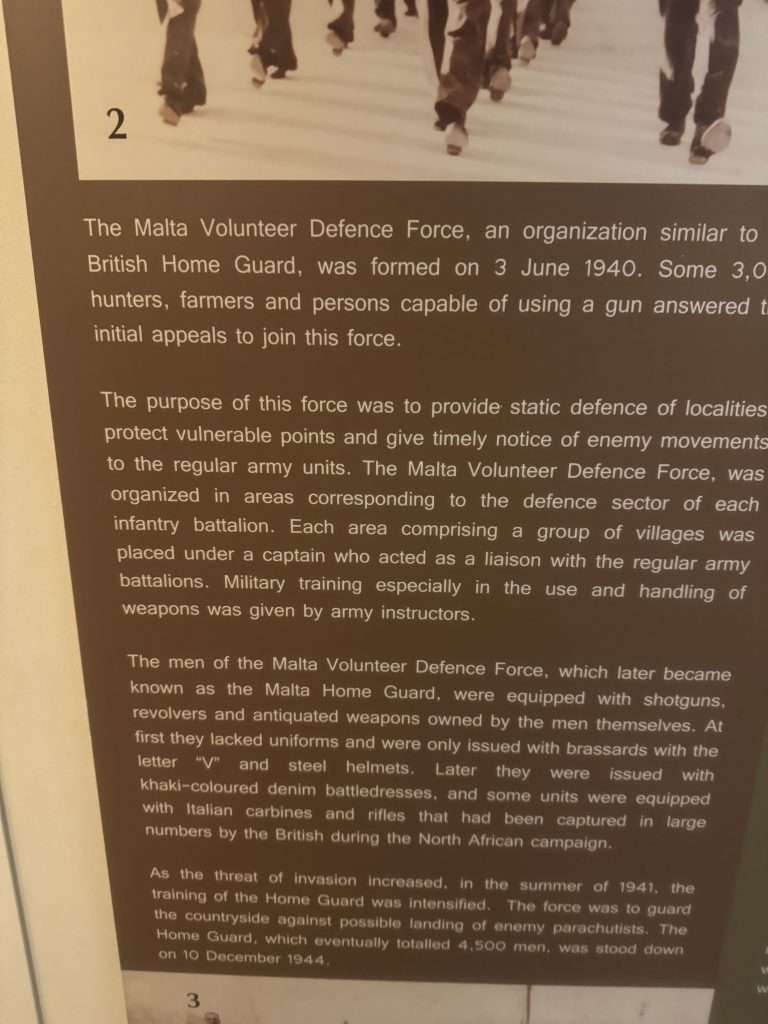
    Following lunch, we took a short walk over to Birgu, where we visited the Malta at War Museum—one of the best wartime museums on the island. This museum, housed in a former British military outpost, contains an extensive collection of wartime photographs, documents, and artifacts, including displays on the various military units, fortifications, and the Malta Home Guard. Given our ongoing research into the what-if scenario of Operation Hercules, we were particularly interested in the museum’s detailed insights into Malta’s defensive strategies during the war.

    Exploring the Underground Air Raid Shelters

    One of the most memorable parts of the visit was touring the underground air raid shelters—an experience that truly brought the reality of Malta’s wartime struggles into focus. Sarah and I descended into the labyrinthine tunnels, carved out of the limestone beneath the museum. These shelters provided refuge for countless Maltese civilians during the near-constant air raids of 1940–42. Standing in the dimly lit, claustrophobic spaces where families huddled together while bombs rained down above was a sobering experience. The museum has preserved these shelters remarkably well, allowing visitors to see firsthand how people lived underground for weeks or even months at a time.

    Adding to Our Library

    While at the museum, we picked up two insightful books to further our research:

    • UXB Malta: Royal Engineers Bomb Disposal 1940-44: This book holds personal significance as Sarah’s great-grandfather, Pacifico Falzon, was an engineer who tragically lost his life due to Luftwaffe bombing. On March 21, 1942—during what is often called “Malta’s Day in Hell”—he was among those killed when Axis forces dropped over 300,000 kg of bombs on the island in a single day. You can read more about the devastation of that day here. This book offers valuable insights into the perilous work of bomb disposal teams, who risked their lives daily to keep Malta’s civilians and infrastructure safe from unexploded ordnance.
    • Marching On: Captain Frederick Oloff Samut & The Union of Maltese Fascists: This publication is particularly useful for our Operation Hercules research, as it delves into the activities of fascist sympathizers in Malta, offering insights into potential fifth column elements on the island. Understanding these political undercurrents helps paint a clearer picture of what an Axis invasion might have looked like had Operation Hercules gone ahead.

    Reflections on Malta’s Wartime Legacy

    Between the Heritage Malta tour in Senglea and our visit to the Malta at War Museum, we gained a deeper appreciation for just how pivotal Malta was in the Mediterranean theatre of World War II. The island’s ability to withstand relentless Axis assaults—often on the brink of collapse—remains one of the great stories of resilience in military history.

    For those interested in WWII history, military wargaming, or Malta’s defensive preparations, these sites are absolutely worth a visit. As we continue our research into Operation Hercules and the alternate history of an Axis invasion, exploring Malta’s real wartime defenses provides invaluable context—both for wargaming scenarios and for understanding the sheer scale of the conflict that played out over the island.

    This day was a powerful reminder that while war games, models, and historical research help bring history to life on the tabletop, there’s nothing quite like standing in the places where history actually happened.